Potty training setbacks / Free article
Toddler Refuses to Sit on the Potty? A Calmer Next Step
By Sprout Steady / November 20, 2026
Educational, AI-assisted article. Not clinically reviewed.
If your toddler refuses to sit on the potty, pause before adding reminders or rewards. First check whether sitting or pooping hurts, then make the bathroom feel safer and offer a small, voluntary step. Your child does not have to produce pee or poop for that step to count.
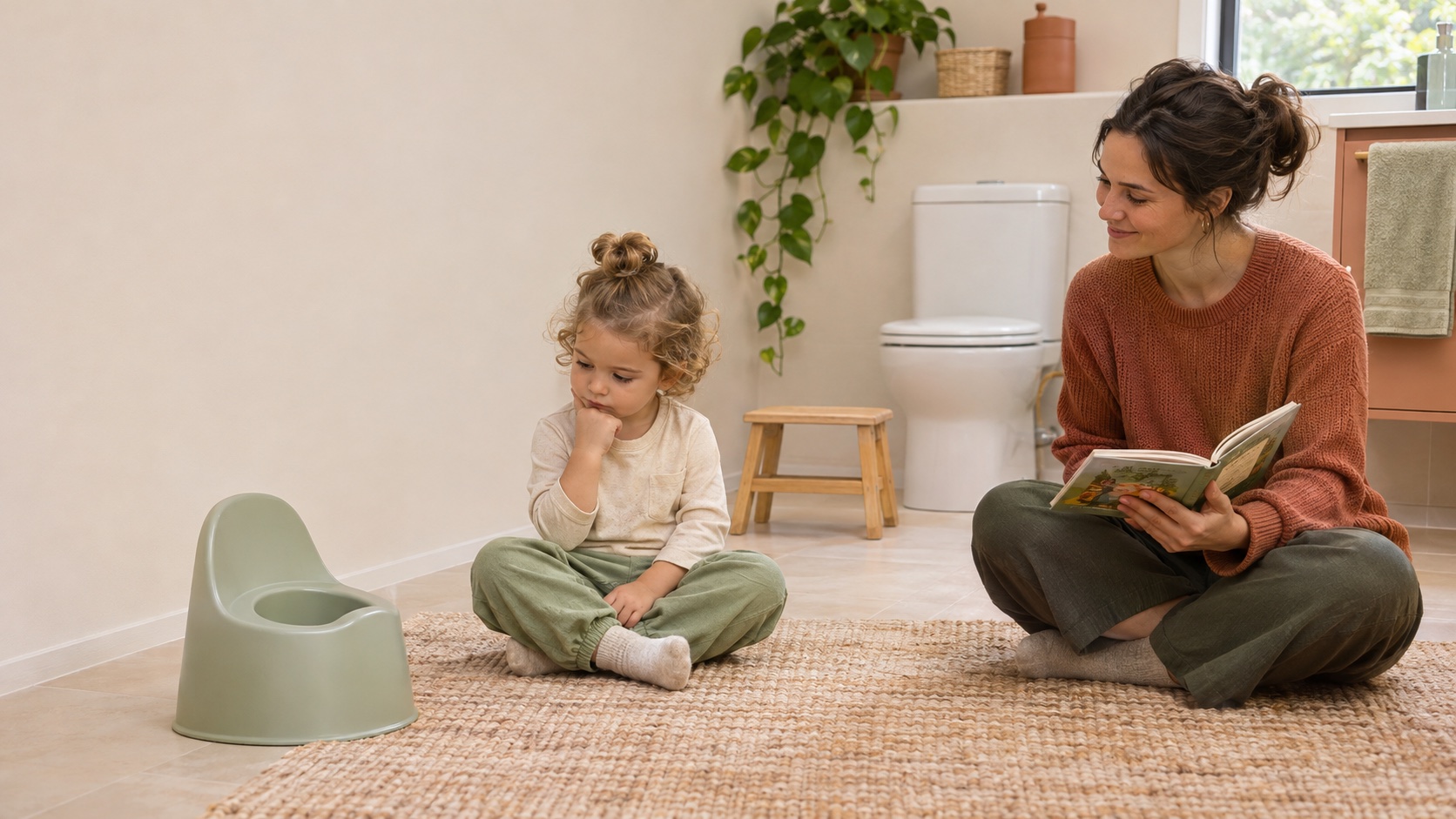
Check comfort and health first
Ask what feels difficult and look for physical clues: hard, dry or painful poop; tiptoeing, stiffening or hiding to hold stool; stool smears or loose leakage; pain when peeing; or a new pattern of wetting or soiling. These can have health causes, including constipation, and a child may not be able to explain what is wrong. Contact your child’s clinician about pain, repeated holding, soiling, or new or recurring accidents after a period of progress. One isolated accident during learning is not the same as a new pattern. The AAP advises checking for physical causes when regression occurs, rather than assuming a behavior problem.
Constipation with blood in the stool or rectal bleeding, bloating, constant abdominal pain, vomiting, or weight loss needs medical attention right away, according to the NIDDK. If your child seems seriously ill, seek emergency care. Do not delay care to track symptoms or finish a potty plan. This article does not diagnose or recommend medication; follow your clinician’s advice.
If your child needs a diaper to poop, do not abruptly refuse it or make access depend on trying the toilet. That can increase holding. Keep bowel movements comfortable, and build bathroom familiarity separately; talk with the clinician if pain or withholding is involved. See ERIC’s guidance for children who only poop in a diaper.
Make the setup feel secure
A refusal can be about the seat, the height, the noise, the timing, or losing a favorite activity, not defiance. Invite your child to show you what feels uncomfortable. Check that a potty is stable or a toilet reducer fits securely. On the toilet, provide a steady footstool so feet do not dangle; a supported position can help a child feel less wobbly. Offer easy-to-remove clothes and help as needed. Explain the flush, and let your child move away before it happens if the sound is startling. The NHS recommends supportive seating and preparation.
Use an ordinary transition, such as after waking or before leaving, for a calm invitation. Avoid asking over and over. Offer a real choice: “Would you like the little potty or the toilet seat?” or “This book or that one?” Do not offer choices you will not honor.
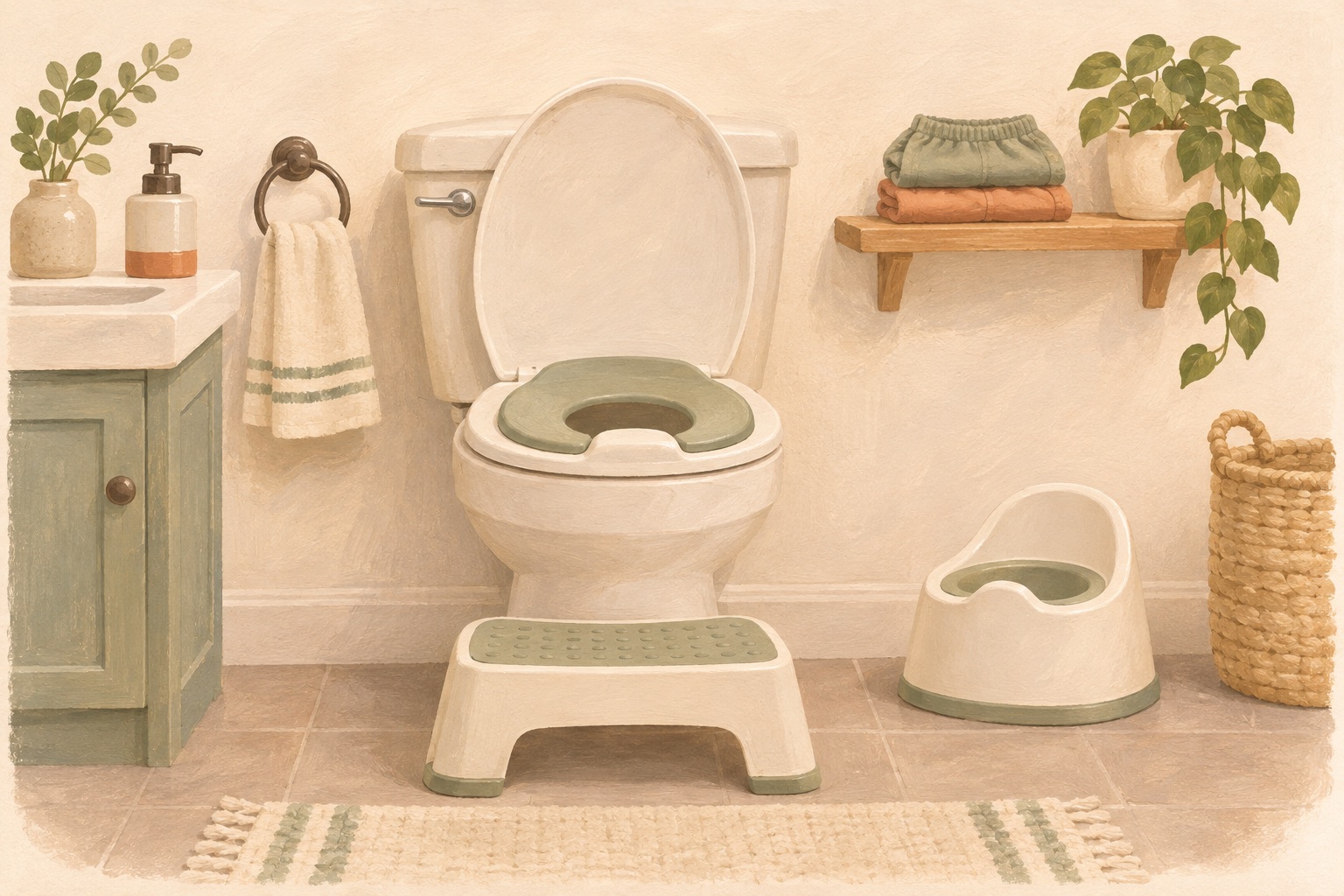
Try a small, voluntary step ladder
Move by comfort, not by a calendar. Start at the easiest step your child accepts, and stay there or make it smaller if distress grows:
- Walk into the bathroom with a trusted adult.
- Look at or explore the potty without having to use it.
- Try a brief, fully clothed sit, only if your child is willing.
- Practice the sequence: manage clothing with help, sit briefly, then get up.
- When your child is ready, offer a chance to pee or poop without requiring a result.
This is a practical familiarization ladder, not a validated treatment program. Some children will skip steps; others need a different approach or individualized support. Keep every sit brief and voluntary. Never hold your child on the seat, prolong sitting until something comes out, or use punishment, shame, threats, or withholding comfort. If your child says no or becomes upset, calmly end the attempt and return later to a smaller step.
Use calm words and notice effort
Keep your language simple and neutral. Try: “Something feels hard. Show me what’s bothering you.” “You can sit for a moment, then get up.” “Your feet are resting on the stool.” After an accident: “Your pants are wet. Let’s get comfortable and change.” These words name what happened without blame or making the child perform.
Specific, low-key praise can recognize actions the child can control: approaching the bathroom, asking for help, or trying a comfortable sit. The AAP and NHS differ in their advice about rewards. As a default, use encouragement rather than big prizes; do not escalate incentives or take rewards away. A prize cannot make painful stool safe. If your child is holding, return to the comfort check and seek clinical advice.
Keep caregiver responses consistent where practical: “We’ll offer once at a familiar time, help with clothing, and stop if it becomes upsetting.” This helps the child know what to expect without turning the potty into a contest.
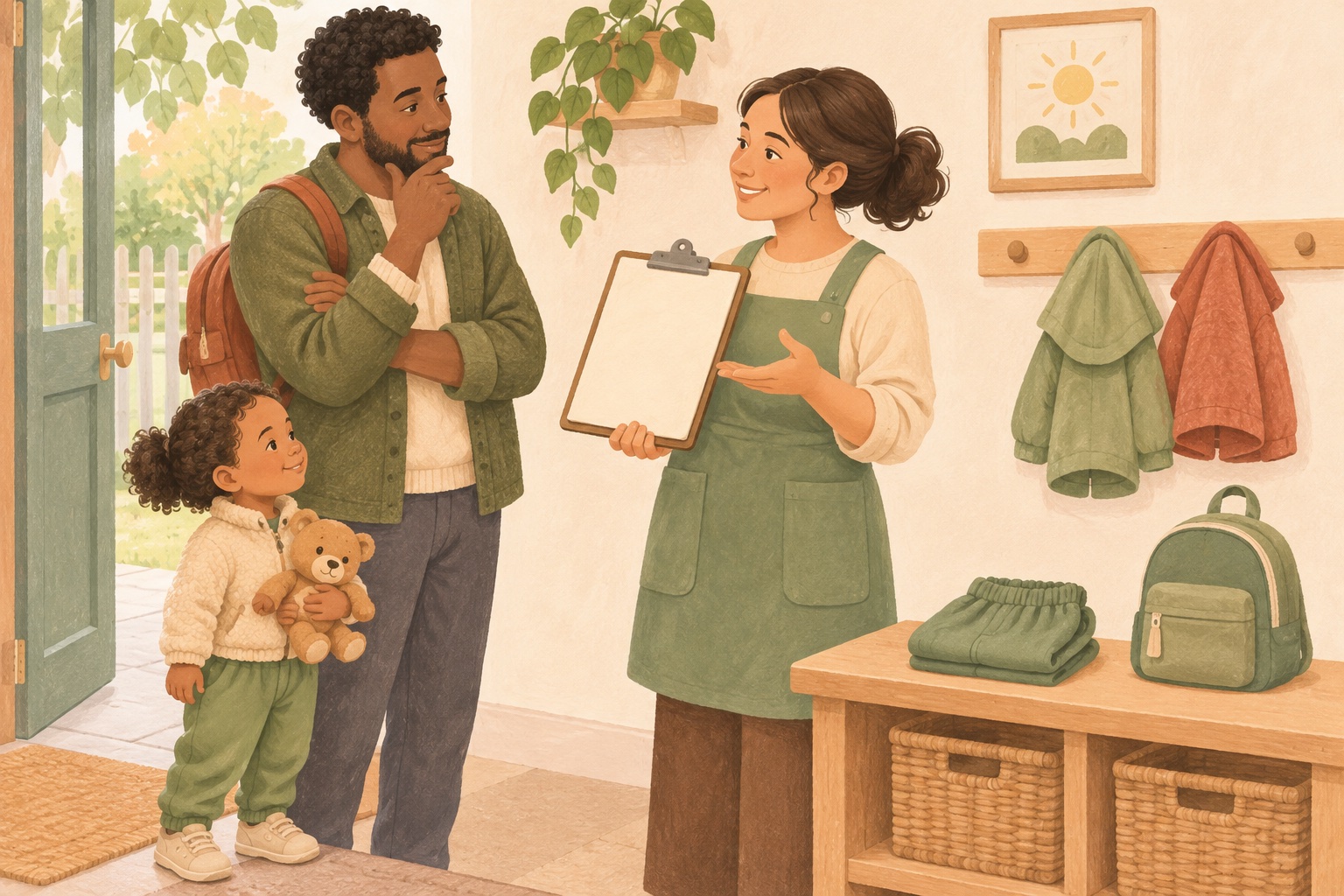
Know when to pause and get help
Pause behavioral practice and contact your child’s clinician if refusal comes with pain, hard stool, repeated holding, stool leakage, urinary discomfort, persistent distress, or a new or recurring accident pattern. Also ask for help if physical access, communication, or developmental needs make a standard routine unsuitable. A clinician can help assess health and suggest an individualized next step.
It is okay if today’s progress is simply a calmer bathroom visit or learning what feels uncomfortable. Children develop at different paces; age is not a deadline, and no method can promise a finish date. Keep the next step manageable, and prioritize your child’s comfort and safety.
Related articles
- Potty Training Regression: Why It Happens and Calm Next Steps
- Is Your Toddler Ready to Potty Train? Signs to Look For
Further reading
- AAP / HealthyChildren: The Right Age to Potty Train
- AAP / HealthyChildren: Potty Training Regression
- NHS: Potty training your child
- NIDDK: Symptoms & Causes of Constipation in Children
- ERIC: Children who will only poo in a nappy and other toilet avoiders
This article is AI-assisted and has not been clinically reviewed. It is general education, not medical advice or a substitute for care from your child’s clinician. The linked organizations are sources, not endorsers of Sprout Steady.